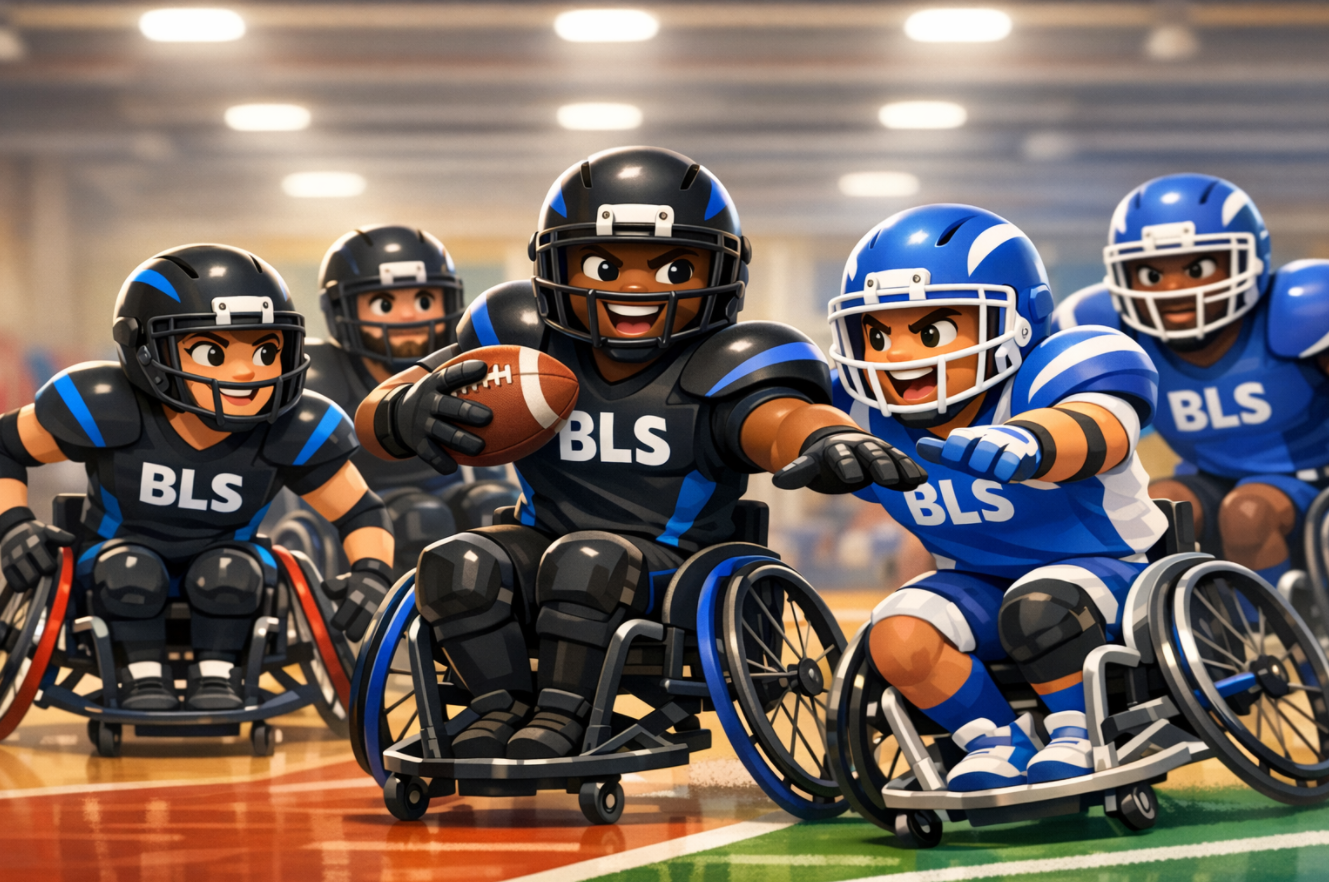
Wheelchair American Football
Wheelchair American Football: A Fast, Inclusive, and Inspiring Sport
Wheelchair American Football is more than just a sport, it’s a thrilling, fast-paced, and inclusive game that brings people together, challenges physical limits, and celebrates teamwork. Whether you’re a seasoned athlete, a newcomer to sports, or simply looking for a new way to stay active and social, this game offers an exciting opportunity to get involved.
What Is Wheelchair American Football?
Wheelchair American Football is an adapted version of traditional American football, designed so that both wheelchair users and non-wheelchair users can play together on an equal footing. It’s typically played indoors on a basketball-sized court or outdoors on a smaller pitch, making it accessible year-round.
The sport is open to people of all abilities, from those with spinal cord injuries or limb differences to those without disabilities who want to experience the game from a new perspective. This inclusivity is one of its greatest strengths, fostering a sense of community and mutual respect among players.
The Spirit of the Game
At its heart, Wheelchair American Football is about more than winning. It’s about:
- Teamwork – Every player has a role, and success comes from working together.
- Adaptability – Players learn to think creatively, using their chairs and positioning to outsmart opponents.
- Empowerment – The sport gives players a chance to push their limits, build confidence, and develop new skills.
- Fun – The energy, speed, and camaraderie make every game an unforgettable experience.
Basic Rules of Wheelchair American Football
While the game is adapted for wheelchairs, it retains the core excitement of American football. Here’s a breakdown of the main rules:
1. Teams and Players
- Games are usually 7-a-side.
- Teams can be mixed-gender and include both wheelchair users and non-users.
- All players use wheelchairs during the game to ensure fairness.
2. The Playing Area
- The court is smaller than a traditional American football field, often the size of a basketball court indoors or a reduced outdoor pitch.
- End zones are marked at each end for scoring touchdowns.
3. The Objective
- The aim is to score more points than the opposing team by carrying or catching the ball in the opponent’s end zone.
4. Game Duration
- Matches are typically split into two halves of around 20 minutes each, with a short halftime break.
- The clock may stop for certain events, such as incomplete passes or fouls.
5. Starting Play
- Games begin with a kick-off or throw-off from one team to the other.
- The receiving team tries to advance the ball toward the opponent’s end zone.
6. Advancing the Ball
- The ball can be moved by passing (throwing) or carrying it while propelling the wheelchair.
- Players must dribble or pass within a set number of pushes to prevent holding the ball indefinitely.
7. Downs System
- Similar to traditional American football, teams have a set number of downs (attempts) to move the ball a certain distance.
- If they succeed, they get a new set of downs; if not, possession changes.
8. Contact Rules
- Physical contact between wheelchairs is allowed but must be controlled and safe.
- Dangerous collisions or intentional ramming are penalised.
9. Scoring
- Touchdown: Carrying or catching the ball in the opponent’s end zone (usually worth 6 points).
- Extra Point: After a touchdown, teams can attempt a short play for 1 or 2 extra points.
- Safety: If the defending team tackles the ball carrier in their own end zone, they score 2 points.
10. Fouls and Penalties
- Common fouls include illegal contact, holding, or unsportsmanlike conduct.
- Penalties result in loss of yards, loss of down, or awarding the other team possession.
Why You Should Try It
Wheelchair American Football isn’t just for elite athletes, it’s for anyone who wants to experience the thrill of sport in a supportive, inclusive environment. Here’s why it’s worth giving it a go:
1. It’s Inclusive
You don’t need to be a wheelchair user to play. Everyone competes on the same terms, which levels the playing field and builds empathy.
2. It’s a Great Workout
The game develops upper body strength, cardiovascular fitness.