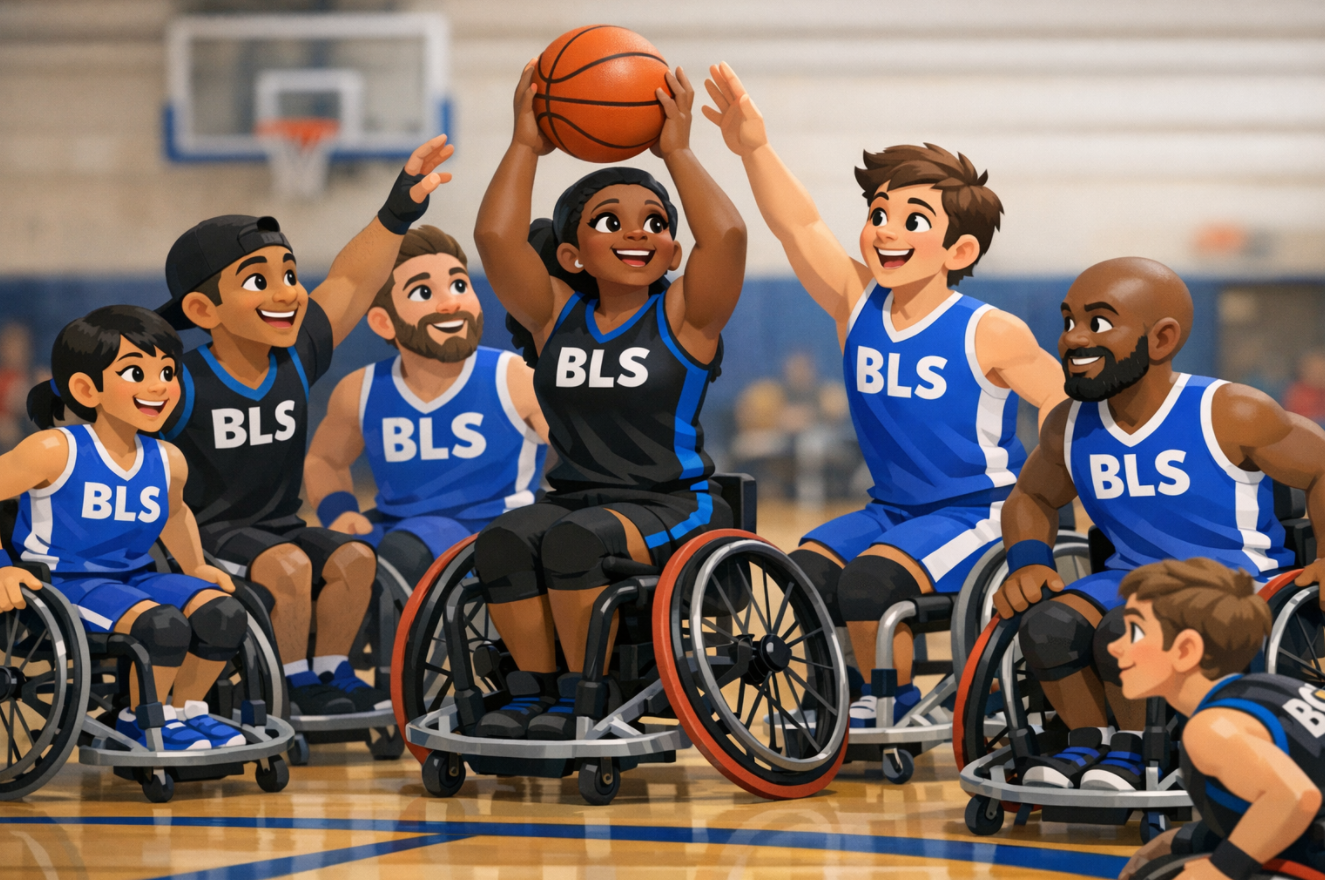
Wheelchair Basketball
Wheelchair Basketball: A Sport of Skill, Strength, and Spirit
Wheelchair basketball is more than just a sport, it’s a celebration of resilience, teamwork, and the sheer joy of competition. Whether you’re an athlete looking for a new challenge, someone seeking a fun way to stay active, or simply curious about adaptive sports, wheelchair basketball offers an inclusive, fast-paced, and deeply rewarding experience.
A Brief History
Wheelchair basketball began in the mid-1940s, pioneered by injured World War II veterans in the United States who wanted to continue playing the game they loved. Over time, it evolved into an internationally recognised sport, governed by the International Wheelchair Basketball Federation (IWBF). Today, it’s played in over 100 countries, with leagues, tournaments, and Paralympic competitions showcasing the sport’s incredible talent and diversity.
The Spirit of the Game
At its core, wheelchair basketball is about ability, not disability. The game is played with the same intensity, strategy, and excitement as running basketball, but with adaptations that make it accessible to athletes with varying levels of physical mobility. The sport fosters a strong sense of community, players often describe their teammates as family, united by shared goals and mutual respect.
Basic Rules of Wheelchair Basketball
While the game shares many similarities with traditional basketball, there are unique rules to ensure fairness and maintain the sport’s dynamic pace.
1. Teams and Court
- Two teams of five players compete at a time.
- The court dimensions and hoop height are the same as in running basketball: a standard 28m x 15m court with a hoop at 3.05m (10 feet).
2. The Wheelchair
- Players use specially designed sports wheelchairs, lightweight, agile, and built for speed and stability.
- The chair is considered part of the player’s body for fouls and ball-handling purposes.
3. Dribbling and Movement
- Players must dribble the ball at least once for every two pushes of their wheelchair.
- This rule ensures a balance between ball control and mobility.
4. Scoring
- Points are awarded the same way as in running basketball:
- 3 points for shots beyond the arc.
- 2 points for shots inside the arc.
- 1 point for free throws.
5. Fouls
- Physical contact rules are similar to running basketball, but they also account for wheelchair contact.
- Charging, blocking, and holding are penalized, and excessive chair-to-chair contact is discouraged for safety.
6. Classification System
- Players are assigned a classification from 1.0 to 4.5 points based on their functional ability, with lower numbers representing higher levels of impairment.
- A team’s total on-court classification cannot exceed 14 points, ensuring balanced competition.
Why You Should Try Wheelchair Basketball
Wheelchair basketball isn’t just for elite athletes, it’s for anyone who wants to challenge themselves, meet new people, and experience the thrill of sport. Here’s why it’s worth giving it a go:
1. It’s Incredibly Inclusive
You don’t need to have a disability to play. Many clubs welcome able-bodied players, making it a fantastic way to promote understanding and empathy while enjoying a level playing field.
2. It Builds Strength and Fitness
Pushing a sports wheelchair at speed, maneuvering sharply, and shooting from a seated position all demand upper body strength, cardiovascular endurance, and coordination. Over time, you’ll notice improvements in your fitness, agility, and stamina.
3. It Sharpens Your Mind
Wheelchair basketball is a game of strategy. You’ll learn to read the court, anticipate opponents’ moves, and make split-second decisions, all while managing your own positioning and ball control.
4. It Creates Lifelong Friendships
The camaraderie in wheelchair basketball is unmatched. Training sessions, tournaments, and social events bring people together from all walks of life, united by a shared love of the game.
5. It’s Pure Fun
From the adrenaline rush of a fast break to the satisfaction of sinking a three-pointer, wheelchair basketball delivers excitement every time you play.
Getting Started
If you’re inspired to give wheelchair basketball a try, here’s how to begin:
- Find a Local Club – Many cities have wheelchair basketball teams or community programs. National governing bodies like British Wheelchair Basketball can help you locate one.
- Attend a Taster Session – Most clubs offer beginner-friendly sessions where you can try the sport without committing to a full season.